Introduction: The Skewer That Changed Our Dinner Routine
The first time we made these harissa honey glazed halloumi skewers, it was one of those evenings when inspiration had completely abandoned us. We’d been testing recipes all week—some triumphs, some disasters—and by Friday night, we were staring into the fridge hoping something would jump out and declare itself dinner. What did jump out was a block of halloumi cheese that had been sitting there, slightly forgotten, and a half-empty jar of harissa paste from a Moroccan tagine experiment the week before.
We’d grilled halloumi before, of course. Who hasn’t fallen in love with that magical transformation when slabs of this squeaky cheese hit a hot grill and develop that golden, crispy exterior while staying impossibly creamy inside? But this time, we decided to brush it with a mixture of harissa and honey during the last few minutes of grilling. The result was nothing short of revelatory.
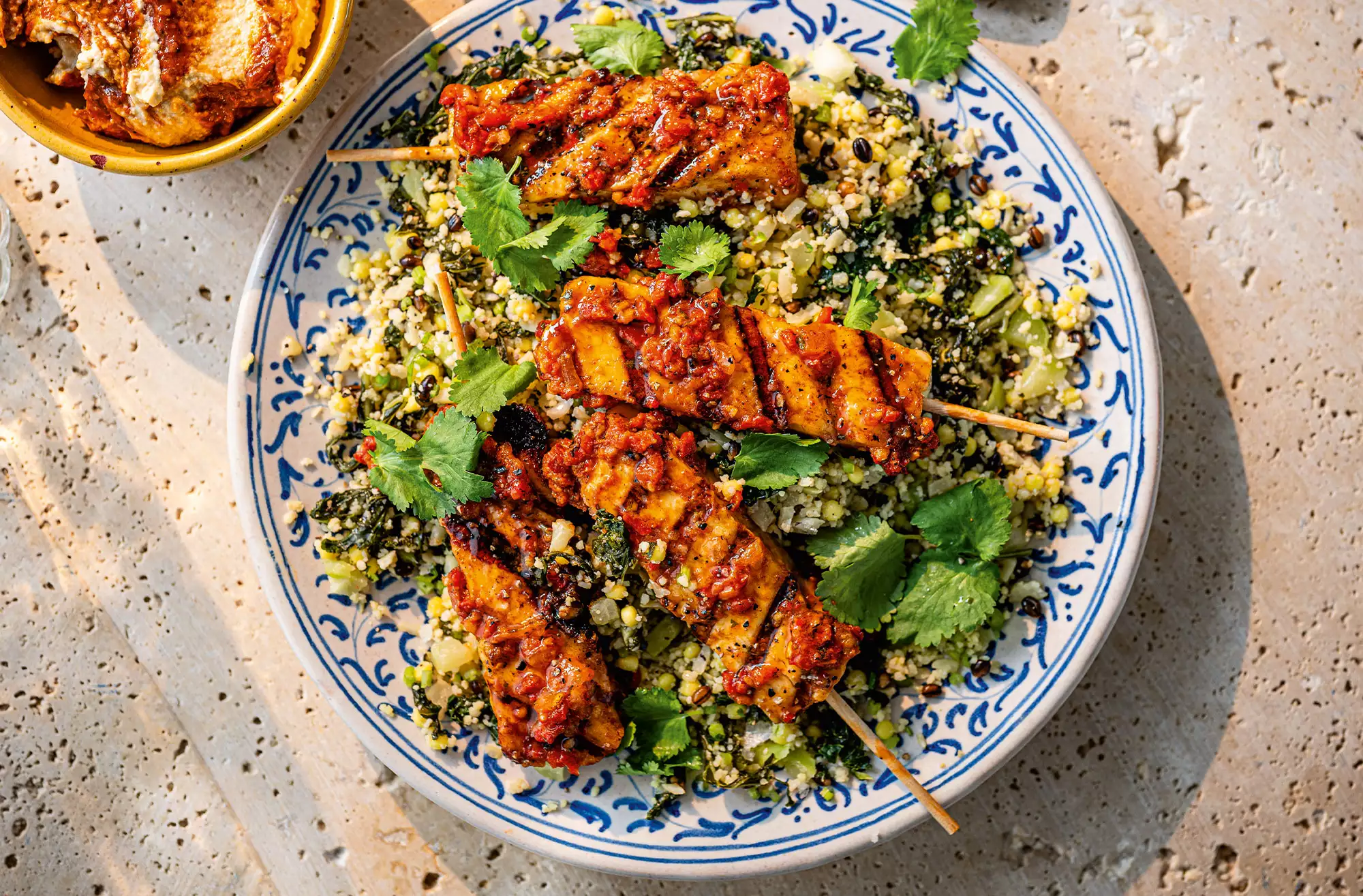
The halloumi caramelized beautifully, the harissa’s smoky heat mellowed by the honey’s sweetness, creating this sticky, glossy coating that made us fight over who got the crispiest edges. We served it over couscous that night—plain, because we were too hungry to get fancy. But the next time, we elevated it with preserved lemon, fresh herbs, and toasted almonds, and suddenly we had a dish that felt worthy of a dinner party yet simple enough for a Tuesday night.
Since then, these skewers have become our go-to when we want something that feels special without requiring hours in the kitchen. The combination of the spicy-sweet halloumi with the bright, tangy couscous creates this perfect balance that keeps everyone coming back for more. Even our meat-loving friends have been converted, which says something about the power of good halloumi and the magic of harissa honey glaze.
Why You’ll Love This Harissa Honey Glazed Halloumi Skewers Recipe
- Vegetarian satisfaction: Halloumi’s unique texture and high melting point make it the perfect meat alternative for grilling, delivering that satisfying chew and savory depth that even committed carnivores appreciate
- Flavor explosion: The harissa honey glaze creates a perfect sweet-heat balance that caramelizes beautifully on the grill, giving you that irresistible sticky-savory coating
- Quick preparation: From fridge to table in under 30 minutes, making it ideal for busy weeknights when you want something impressive without the time commitment
- Make-ahead friendly: The couscous can be prepared hours in advance and served at room temperature, while the halloumi is best grilled just before serving
- Versatile serving options: Perfect as a main course, impressive appetizer, or part of a Mediterranean mezze spread for entertaining
- Year-round appeal: Grill it outdoors in summer or use a grill pan indoors during colder months—this dish delivers regardless of the season
Ingredients
For the Harissa Honey Glazed Halloumi Skewers
- 1½ pounds halloumi cheese, cut into 1-inch cubes
- 2 tablespoons harissa paste (adjust to your heat preference)
- 2 tablespoons honey (preferably runny honey for easy mixing)
- 2 tablespoons olive oil
- 1 tablespoon lemon juice (freshly squeezed)
- 2 cloves garlic, minced
- ½ teaspoon ground cumin
- ¼ teaspoon smoked paprika
- Salt and freshly ground black pepper to taste
- Wooden or metal skewers (if using wooden, soak in water for 30 minutes)
For the Preserved Lemon Couscous
- 1½ cups couscous (regular or pearl/couscous)
- 2 cups vegetable broth or water
- 1 tablespoon olive oil
- 1 preserved lemon, pulp removed and rind finely chopped
- ¼ cup fresh parsley, chopped
- ¼ cup fresh mint, chopped
- 2 tablespoons toasted pine nuts or slivered almonds
- 2 tablespoons extra virgin olive oil
- Salt and freshly ground black pepper to taste
Step-by-Step Instructions
Preparing the Couscous Base
- Toast the couscous: Heat 1 tablespoon of olive oil in a medium saucepan over medium heat. Add the couscous and stir constantly for 2-3 minutes until lightly golden and fragrant. This step adds a nutty depth to the final dish.
- Cook the couscous: Pour in the vegetable broth or water and bring to a boil. Reduce heat to low, cover, and simmer for 8-10 minutes (or according to package instructions) until the liquid is absorbed and the couscous is tender but not mushy.
- Fluff and rest: Remove from heat and let stand, covered, for 5 minutes. Then fluff with a fork to separate the grains. This resting period is crucial for achieving light, fluffy couscous rather than clumpy results.
- Prepare the preserved lemon mixture: While the couscous cooks, finely chop the preserved lemon rind (discard the pulp as it’s usually too salty). In a small bowl, mix the chopped preserved lemon with the extra virgin olive oil, a pinch of salt, and freshly ground black pepper.
- Combine and season: Pour the preserved lemon oil mixture over the fluffed couscous and gently fold to combine. Add the chopped fresh herbs (parsley and mint) and toasted nuts, folding gently to distribute evenly without crushing the couscous grains.
- Adjust seasoning: Taste and adjust salt and pepper as needed. Remember that preserved lemons are quite salty, so you may need less additional salt than expected. Cover and set aside while preparing the skewers.
Preparing the Harissa Honey Glaze and Skewers
- Prepare the glaze: In a small bowl, whisk together the harissa paste, honey, olive oil, lemon juice, minced garlic, ground cumin, and smoked paprika until smooth and well combined. The mixture should be thick but pourable.
- Prepare the halloumi: Cut the halloumi into uniform 1-inch cubes. Pat them dry with paper towels to remove excess moisture, which helps achieve better caramelization on the grill.
- Thread the skewers: Thread the halloumi cubes onto your soaked wooden or metal skewers, leaving a small space between each piece to ensure even cooking. Don’t pack them too tightly, as this can prevent proper caramelization.
- Preheat your cooking surface: Heat your grill, grill pan, or broiler to medium-high heat (about 400°F/200°C). Make sure the grates are clean and lightly oiled to prevent sticking.
- First grilling phase: Place the skewers on the hot grill and cook for 2-3 minutes per side until the halloumi develops golden-brown grill marks. The cheese will soften but shouldn’t melt through the grates.
- Apply the glaze: During the last 2 minutes of cooking, brush the harissa honey glaze generously over all sides of the halloumi. The sugars in the honey will caramelize quickly, creating that beautiful sticky coating.
- Final caramelization: Continue grilling for 1-2 minutes more, turning occasionally, until the glaze is bubbling and slightly caramelized. Watch carefully as the honey can burn quickly if left unattended.
- Rest briefly: Remove the skewers from the heat and let them rest for 2-3 minutes. The halloumi will firm up slightly, making it easier to handle and eat.
Plating and Serving
- Prepare the serving platter: Spread the prepared preserved lemon couscous on a large serving platter or individual plates, creating a bed for the skewers.
- Arrange the skewers: Place the harissa honey glazed halloumi skewers on top of the couscous, arranging them attractively with some skewers crossing over others for visual appeal.
- Garnish: Drizzle any remaining glaze over the top, and garnish with additional fresh herbs, a sprinkle of toasted nuts, and if desired, a few thin slices of fresh chili for color and extra heat.
- Serve immediately: These skewers are best enjoyed hot off the grill while the halloumi is at its perfect texture—crispy outside, creamy inside. Serve with lemon wedges on the side for those who want extra brightness.
Time, Servings, and Difficulty
- Preparation time: 15 minutes
- Cooking time: 15 minutes
- Total time: 30 minutes
- Servings: 4 as a main course, 6-8 as an appetizer
- Difficulty: Easy
Substitutions and Variations
Cheese alternatives: If halloumi isn’t available, try using paneer (Indian cheese) or queso panela. Both have similar high melting points and will work well with the harissa honey glaze. Tofu can also work for a vegan version, though you’ll want to press it well and possibly marinate longer.
Harissa alternatives: No harissa paste? Mix 1 tablespoon of tomato paste with 1 teaspoon each of smoked paprika, cumin, and cayenne pepper. Add a clove of minced garlic and a splash of olive oil to approximate the flavor profile.
Couscous variations: Substitute quinoa, bulgur wheat, or even orzo pasta for the couscous. Each will bring a different texture but work beautifully with the preserved lemon and herbs.
Dietary adaptations: For a vegan version, use maple syrup instead of honey and substitute the halloumi with extra-firm tofu or king oyster mushrooms. The cooking times will be similar, though mushrooms may release more moisture.
Flavor variations: Add vegetables to your skewers—cherry tomatoes, zucchini chunks, or red onion wedges all pair wonderfully with the harissa honey glaze. You can also experiment with different herb combinations in the couscous, such as dill and chives instead of parsley and mint.
Storage and Reheating
Couscous storage: The preserved lemon couscous stores beautifully in an airtight container in the refrigerator for up to 4 days. The flavors actually develop and improve overnight, making it an excellent make-ahead component.
Halloumi storage: Cooked halloumi skewers are best enjoyed fresh, as they tend to become tough and rubbery when refrigerated. However, if you must store them, place in an airtight container and refrigerate for up to 2 days.
Reheating halloumi: To reheat refrigerated halloumi, place it in a 350°F oven for 5-7 minutes until warmed through. Avoid microwaving as it will make the cheese tough and chewy. For best results, reheat in a skillet over medium heat with a tiny splash of olive oil.
Make-ahead strategy: Prepare the couscous and harissa honey glaze up to 2 days in advance. Store separately in the refrigerator. Cut the halloumi and store it in its packaging or an airtight container. When ready to serve, grill the halloumi and assemble the dish fresh.
Sam & Eric’s Pro Tips
- Halloumi temperature matters: Always bring halloumi to room temperature before grilling. Cold cheese straight from the refrigerator won’t caramelize properly and may release too much moisture, preventing that perfect golden crust from forming.
- Control the heat: The honey in the glaze burns easily. If you notice the glaze darkening too quickly, move the skewers to a cooler part of the grill or reduce the heat. You want caramelization, not charring.
- Double the glaze: Make extra harissa honey glaze and serve it on the side as a dipping sauce. People always want more of that sticky, spicy-sweet magic, and having extra ensures everyone gets their perfect amount.
- Preserve your lemons properly: When using preserved lemons, rinse them briefly under cold water to remove excess salt, then pat dry. The rind is where all the flavor lives—don’t throw it away! The pulp is usually too salty and mushy for this application.
- Texture contrast is key: Don’t skip the toasted nuts in the couscous. They add crucial textural contrast to the creamy halloumi and fluffy couscous. Pine nuts, almonds, or even pistachios all work beautifully.
Frequently Asked Questions
Can I make this recipe vegan?
Yes! Substitute the halloumi with extra-firm tofu (pressed well to remove moisture) or king oyster mushrooms. Use maple syrup instead of honey in the glaze. The cooking method remains the same, though tofu may need an extra minute per side to develop a good crust.
Where can I find preserved lemons?
Preserved lemons are available in most well-stocked grocery stores, specialty food stores, or Middle Eastern markets. They’re also incredibly easy to make at home—simply pack quartered lemons in a jar with salt and let them ferment for 3-4 weeks. Once you have a jar, they’ll keep in your refrigerator for months.
Can I prepare the skewers in advance?
You can thread the halloumi onto skewers up to 8 hours ahead and store them covered in the refrigerator. However, wait to apply the glaze until just before grilling for the best caramelization. The couscous can be fully prepared up to 2 days ahead.
What if I don’t have a grill or grill pan?
No problem! You can cook these skewers under a broiler set to high. Place them on a foil-lined baking sheet about 6 inches from the heat source. Watch carefully and turn them frequently to ensure even cooking and prevent the honey from burning.
How spicy is this dish?
The heat level depends on your harissa paste. Commercial harissa varies widely in spiciness. Start with the amount listed and taste the glaze before applying it. You can always add more harissa if you want more heat, or reduce it if you prefer milder flavors. The honey does help mellow the heat considerably.
Can I add vegetables to the skewers?
Absolutely! Cherry tomatoes, zucchini chunks, red onion wedges, and bell peppers all work wonderfully. Just be aware that vegetables with higher water content may release moisture that could affect the halloumi’s caramelization. Consider pre-grilling watery vegetables briefly before adding them to the skewers.
Closing: From Our Kitchen to Yours
These harissa honey glazed halloumi skewers have become one of those recipes we turn to when we want to impress without stress. There’s something magical about watching people’s faces light up when they take that first bite—the way the spicy-sweet glaze meets the salty halloumi, how it pairs with the bright, herby couscous. It’s the kind of dish that makes people ask for the recipe before they’ve even finished their first serving.
We love how this recipe brings together flavors from different culinary traditions—the North African harissa, Mediterranean halloumi and preserved lemons, and the universal appeal of anything served on a skewer. It’s proof that some of the best dishes come from combining ingredients you already love in new ways.
Whether you’re making this for a casual weeknight dinner, a summer barbecue, or a special gathering with friends, we hope these skewers bring as much joy to your table as they have to ours. And if you do make them, we’d love to hear how they turn out! Did you add your own twist? What did you serve them with? Drop us a comment below—we read every single one and always love hearing your kitchen stories.
Happy cooking, friends!
Sam & Eric
FoodiePair
Want more Mediterranean-inspired vegetarian recipes? Check out our [Internal Link: Mediterranean Chickpea Salad with Lemon-Tahini Dressing] or [Internal Link: Grilled Vegetable Platter with Herbed Yogurt Sauce]. Don’t forget to subscribe to our newsletter for weekly recipe inspiration delivered straight to your inbox!








Leave a Reply