Introduction: A Midnight Craving That Changed Everything
The fluorescent glow of the 24-hour Korean market cast an otherworldly light on the refrigerated aisle where Eric stood, transfixed. It was 11:47 PM, and we’d just finished an exhausting day of recipe testing that somehow left us both simultaneously stuffed and starving. The scent of marinated beef from the food court still lingered on our clothes as we wandered the aisles, searching for something that would satisfy the craving we couldn’t quite name.
There it was—a jar of gochujang paste, its deep crimson color almost hypnotic under the bright lights. Memories of our trip to Seoul flooded back: the street vendors selling tteokbokki, the smoky aroma of bulgogi sizzling on tabletop grills, the way the heat from Korean chili paste seemed to warm you from the inside out. But tonight, we weren’t in Seoul. We were in our tiny apartment kitchen, with only tortillas, some wilting cilantro, and whatever else we could scrounge up.
What happened next became one of those magical cooking moments that you can’t plan for. Eric grabbed the gochujang, I found some leftover steak in the fridge, and we started improvising. The fusion wasn’t calculated—it was born from exhaustion, creativity, and that specific kind of hunger that only strikes at midnight. We marinated the beef in a mixture of gochujang, soy sauce, and a splash of something we hoped was mirin. The result was transformative.
The first bite was everything we didn’t know we needed. The beef was tender with that perfect caramelized char, the heat building slowly but insistently. The tortillas, slightly charred from our gas burner, provided the perfect vehicle. But it was the kimchi slaw—crisp, tangy, with that distinctive fermented funk—that elevated these from good to unforgettable. The cool crunch of cabbage against the warm, spicy beef created a textural symphony that had us making satisfied noises usually reserved for much fancier restaurants.
We’ve refined this recipe countless times since that midnight experiment. The proportions are perfect now, the technique dialed in. But every time we make these Korean Gochujang Beef Tacos with Kimchi Slaw, we’re transported back to that fluorescent-lit moment of pure culinary discovery. They’re the kind of dish that makes people stop talking mid-sentence, that causes spontaneous happy dances in the kitchen, that reminds you why you fell in love with cooking in the first place.
Whether you’re a taco enthusiast, a Korean food lover, or someone who appreciates the magic that happens when culinary traditions collide, these tacos deliver on every level. They’re spicy but balanced, complex but achievable, fusion food that respects both traditions while creating something entirely new. Perfect for impressing dinner guests, elevating your weeknight routine, or just treating yourself to something extraordinary on an ordinary Tuesday.
Why You’ll Love These Korean Gochujang Beef Tacos
- Explosive Flavor Profile: The gochujang marinade creates layers of sweet, spicy, savory, and umami that build with each bite, while the kimchi slaw adds bright acidity and crunch.
- Weeknight Friendly: Despite the complex flavors, these tacos come together in under 45 minutes, making them perfect for busy evenings when you want something special.
- Crowd-Pleasing Fusion: The combination of Korean and Mexican elements creates a unique dish that appeals to adventurous eaters and comfort food lovers alike.
- Customizable Heat: Adjust the gochujang amount to suit your spice tolerance, making these accessible for everyone from heat-seekers to mild-preferring family members.
- Make-Ahead Friendly: The beef can be marinated up to 24 hours in advance, and the slaw actually improves with time, making meal prep a breeze.
Ingredients
For the Gochujang Beef Marinade
- 1.5 lbs flank steak or skirt steak, thinly sliced against the grain
- 3 tablespoons gochujang paste (Korean chili paste)
- 2 tablespoons soy sauce
- 1 tablespoon sesame oil
- 1 tablespoon rice vinegar
- 1 tablespoon brown sugar
- 4 cloves garlic, minced
- 1 tablespoon fresh ginger, grated
- 1 green onion, finely chopped
- 1 teaspoon sesame seeds
For the Kimchi Slaw
- 2 cups napa cabbage kimchi, drained and chopped
- 1 cup purple cabbage, thinly sliced
- 1/2 cup carrot, julienned
- 2 green onions, thinly sliced
- 1 tablespoon rice vinegar
- 1 teaspoon sesame oil
- 1/2 teaspoon sugar
- Optional: 1 teaspoon gochugaru (Korean chili flakes) for extra heat
For Assembly
- 8 small corn tortillas
- 1/4 cup fresh cilantro leaves
- 2 tablespoons sesame seeds
- 1 lime, cut into wedges
- Optional: sliced fresh chili peppers for garnish
Step-by-Step Instructions
Step 1: Prepare the Beef Marinade
In a medium bowl, whisk together the gochujang paste, soy sauce, sesame oil, rice vinegar, brown sugar, minced garlic, grated ginger, chopped green onion, and sesame seeds until completely smooth. The mixture should be thick but pourable, with a deep red color and fragrant aroma.
Step 2: Slice and Marinate the Beef
Place your thinly sliced beef in a large zip-top bag or shallow dish. Pour the marinade over the beef, ensuring every piece is well-coated. Massage the marinade into the meat gently but thoroughly. Seal the bag or cover the dish and refrigerate for at least 30 minutes, or up to 24 hours for maximum flavor penetration. If marinating for more than 2 hours, give the bag a gentle shake halfway through to redistribute the marinade.
Step 3: Prepare the Kimchi Slaw Base
While the beef marinates, prepare your slaw components. Drain the kimchi thoroughly and chop it into bite-sized pieces if the pieces are too large. The draining is crucial—excess liquid will make your slaw soggy. Place the chopped kimchi in a large mixing bowl.
Step 4: Add Fresh Vegetables
Add the thinly sliced purple cabbage, julienned carrot, and sliced green onions to the bowl with the kimchi. The combination of fermented kimchi and fresh vegetables creates the perfect balance of tangy, crunchy, and fresh flavors.
Step 5: Dress the Slaw
In a small bowl, whisk together the rice vinegar, sesame oil, and sugar until the sugar dissolves completely. Pour this dressing over the slaw mixture and toss thoroughly to combine. If using gochugaru for extra heat, sprinkle it in now and mix well. The slaw can be made up to 2 hours ahead and refrigerated, which actually improves the flavor as the ingredients meld together.
Step 6: Prepare Your Cooking Surface
Heat a large cast-iron skillet or heavy-bottomed pan over medium-high heat until it’s smoking hot. This high heat is essential for achieving the perfect sear on the beef and developing those crispy, caramelized edges that make this dish so special. If you have a grill, you can also cook the beef over high heat for an even more authentic char.
Step 7: Cook the Beef in Batches
Working in batches to avoid overcrowding (which would cause the beef to steam rather than sear), add the marinated beef to the hot pan in a single layer. Cook for 2-3 minutes without moving the beef, allowing it to develop a deep brown crust. Flip the pieces and cook for an additional 1-2 minutes until the beef is cooked through but still tender. The high heat and quick cooking time keep the beef juicy while creating those irresistible crispy edges.
Step 8: Rest and Slice (If Needed)
If you’re using a thicker cut of beef that you cooked whole before slicing, let it rest for 5 minutes before slicing against the grain. This resting period allows the juices to redistribute throughout the meat, ensuring each bite is tender and flavorful. For pre-sliced beef, you can skip this step.
Step 9: Warm the Tortillas
While the beef cooks, warm your corn tortillas. You can do this directly over a gas flame for about 15 seconds per side until they’re slightly charred and pliable, or in a dry skillet over medium heat. Stack the warmed tortillas and keep them wrapped in a clean kitchen towel to maintain warmth and prevent drying out.
Step 10: Assemble Your Tacos
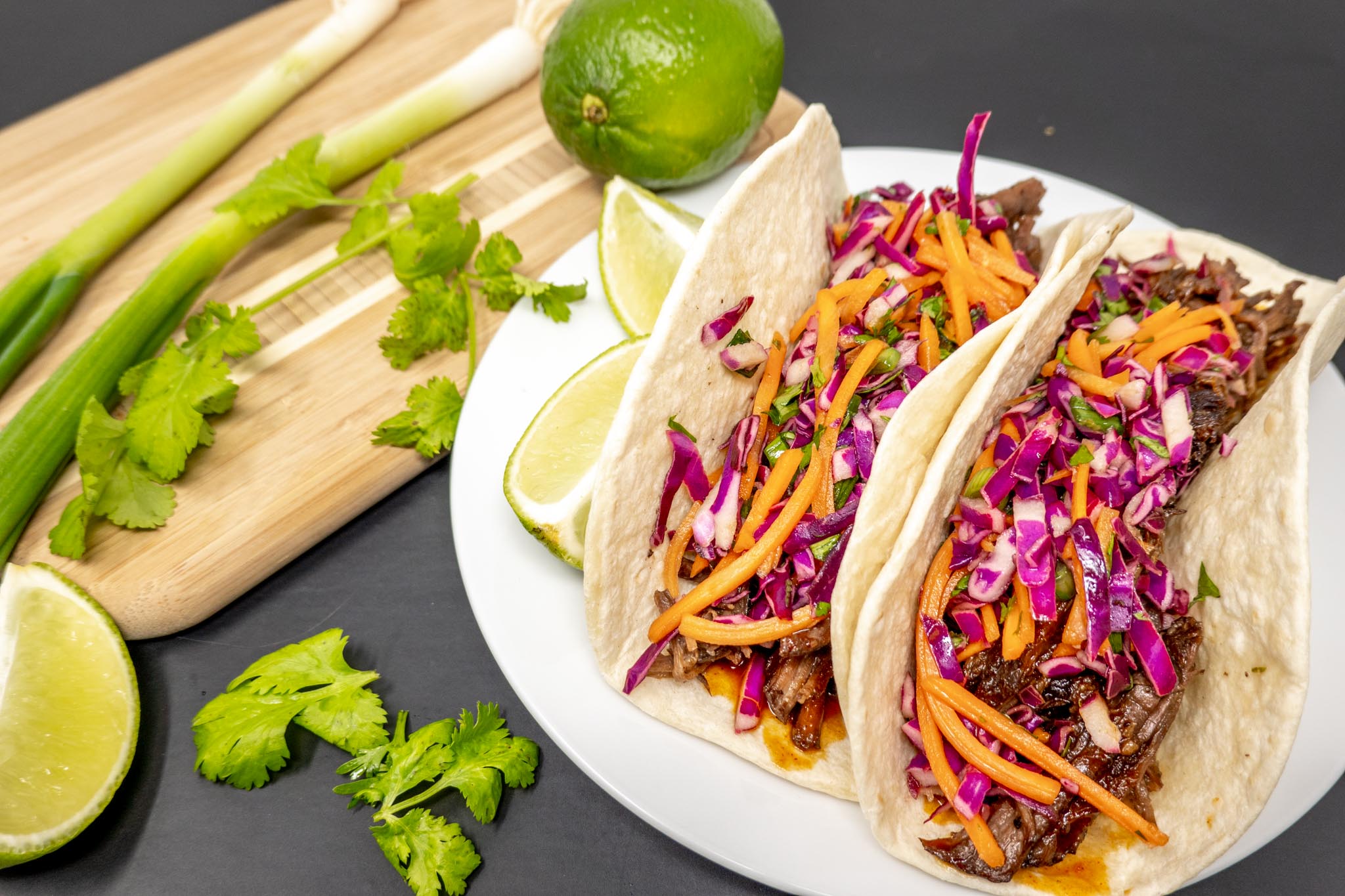
Lay out your warmed tortillas on a clean surface. Place a generous portion of the cooked gochujang beef in the center of each tortilla, dividing it evenly among all 8 tacos. The beef should be warm and aromatic, with crispy edges and a glossy sheen from the marinade.
Step 11: Add the Kimchi Slaw
Top each taco with a heaping spoonful of the kimchi slaw, distributing it evenly. The cool, crunchy slaw provides the perfect contrast to the warm, spicy beef. Don’t be shy with the slaw—it’s a key component that balances the richness of the meat.
Step 12: Garnish and Finish
Sprinkle each taco with fresh cilantro leaves and sesame seeds. If you’re using fresh chili peppers for garnish, add thin slices now. The garnishes add freshness, visual appeal, and an extra layer of flavor complexity.
Step 13: Serve Immediately
Arrange the assembled tacos on a serving platter and serve immediately while everything is at its peak temperature and texture. Serve with lime wedges on the side for squeezing over the top, which adds brightness and helps cut through the richness.
Step 14: Enjoy the Fusion Magic
Take your first bite and experience the explosion of flavors and textures: the warm, spicy beef with its caramelized edges, the cool and tangy kimchi slaw, the fresh herbs, the squeeze of lime, all wrapped in a perfectly charred tortilla. This is fusion food at its finest—respectful of both traditions while creating something entirely new and exciting.
Time, Servings, and Difficulty
- Prep Time: 20 minutes (plus optional marinating time)
- Cook Time: 15 minutes
- Total Time: 35 minutes (or up to 24 hours with advance marinating)
- Servings: 8 tacos (serves 4 people as a main course)
- Difficulty Level: Medium – requires some technique but totally achievable for home cooks
Substitutions and Variations
Protein Alternatives
Not a beef eater? Try these variations: Use chicken thighs for a juicier alternative, pork shoulder for a richer flavor, or firm tofu for a vegetarian version. For seafood lovers, shrimp works beautifully with a shorter cooking time of just 2-3 minutes total.
Heat Level Adjustments
Control the spice by adjusting the gochujang amount: use 2 tablespoons for mild, 3 tablespoons for medium, or 4 tablespoons for hot. You can also substitute half the gochujang with miso paste for a milder, more umami-forward flavor.
Tortilla Options
While corn tortillas provide the most authentic experience, flour tortillas work well too. For a low-carb option, serve the beef and slaw over cauliflower rice or in lettuce wraps. Siete brand makes excellent grain-free tortillas if you’re avoiding corn.
Slaw Variations
Customize your slaw based on what you have: add julienned cucumber for extra freshness, substitute regular cabbage for purple, or add thinly sliced pear for a touch of sweetness that complements the spicy beef beautifully.
Storage and Reheating
Storage Guidelines
Store components separately for best results: cooked beef in an airtight container for up to 3 days, kimchi slaw in a separate container for up to 2 days (it will get softer but still tasty), and tortillas wrapped tightly. The beef actually tastes even better the next day as the flavors continue to develop.
Reheating Methods
For the beef, reheat gently in a skillet over medium heat with a splash of water or broth to prevent drying out. Microwave reheating works in a pinch but may make the beef tougher. The slaw is best served fresh, but you can refresh it with an extra squeeze of lime juice if needed. Warm tortillas in a skillet or directly over a gas flame for the best texture.
Make-Ahead Tips
Marinate the beef up to 24 hours ahead and prepare the slaw up to 2 hours ahead. Store separately and assemble just before serving for the best texture contrast between the warm beef and cool slaw.
Sam & Eric’s Pro Tips
1. The Sear Secret
Don’t crowd the pan when cooking the beef. Overcrowding causes steaming instead of searing, which means you’ll miss out on those crispy, caramelized edges that make these tacos so special. Cook in batches if necessary, and make sure your pan is screaming hot before adding the meat.
2. Kimchi Draining Technique
Take the time to properly drain your kimchi. Place it in a fine-mesh strainer and press gently to remove excess liquid. This prevents your slaw from becoming watery and ensures the perfect crunchy texture that contrasts beautifully with the tender beef.
3. Tortilla Char Mastery
For the best tortilla texture, char them directly over a gas flame for 15 seconds per side using tongs. This creates slight charring that adds smoky flavor and makes the tortillas more pliable. If you don’t have gas, a hot cast-iron skillet works well too—just watch carefully to prevent burning.
Frequently Asked Questions
Can I make these tacos less spicy?
Absolutely! Reduce the gochujang to 1-2 tablespoons and add extra brown sugar to balance the heat. You can also mix the gochujang with an equal amount of miso paste for a milder, more umami-forward flavor profile that’s still delicious.
Where can I find gochujang paste?
Gochujang is increasingly available in mainstream grocery stores, usually in the international or Asian foods aisle. If you can’t find it locally, check online retailers like Amazon or Asian grocery stores. Look for it in red plastic containers or tubes—it’s a staple Korean ingredient that’s worth seeking out.
Can I prepare these ahead for a party?
Yes! Marinate the beef up to 24 hours ahead and prepare the slaw up to 2 hours ahead. Cook the beef just before serving and keep it warm in a low oven (200°F). Set up a taco bar with all components so guests can assemble their own, which is more fun and ensures everyone gets their preferred ratio of beef to slaw.
What can I serve with these tacos?
These tacos pair beautifully with simple sides that don’t compete with their bold flavors. Try steamed rice, a simple cucumber salad, or roasted vegetables. For drinks, Korean beer, soju, or a crisp lager complement the spicy beef perfectly. A light, citrusy margarita also works surprisingly well with the fusion flavors.
Can I freeze the marinated beef?
Yes! The marinated beef freezes beautifully for up to 3 months. Place it in a freezer-safe bag with all the marinade, remove excess air, and freeze flat. Thaw overnight in the refrigerator before cooking. The texture remains excellent, and you’ll have a quick meal ready to go whenever the craving strikes.
Closing Thoughts from Sam & Eric
These Korean Gochujang Beef Tacos with Kimchi Slaw represent everything we love about cooking: the joy of experimentation, the magic that happens when different culinary traditions meet, and the way food can transport you to different places and times. From that fluorescent-lit midnight market run to countless taco nights since, this recipe has become a beloved part of our cooking repertoire.
We’ve shared these tacos with friends who swore they didn’t like spicy food (they changed their minds), served them at dinner parties where they disappeared faster than we could assemble them, and made them on quiet Tuesday nights when we needed something special to break up the routine. Every time, they deliver that perfect balance of comfort and excitement, familiarity and discovery.
The beauty of fusion cooking is that it allows us to honor multiple culinary traditions while creating something entirely new. These tacos pay homage to the rich flavors of Korean cuisine—the fermented depth of kimchi, the complex heat of gochujang, the nutty aroma of sesame—while embracing the casual, communal spirit of Mexican street food. It’s a reminder that the best culinary innovations often come from unexpected combinations and midnight cravings.
We’d love to hear about your experience with these tacos! Did you make any creative substitutions? How did you adjust the heat level? What sides did you serve them with? Share your photos and stories in the comments below, and don’t forget to tag us on social media with #FoodiePairFusion. If you’re hungry for more bold flavor combinations, [Internal Link: Related Recipe] might be your next kitchen adventure.
Until next time, happy cooking and even happier eating!
Sam & Eric
FoodiePair







Leave a Reply